
Foot Soak for Toenail Fungus: What Actually Helps?
Understanding popular foot soaks, their limitations, everyday nail care, and practical options for stubborn toenail changes.
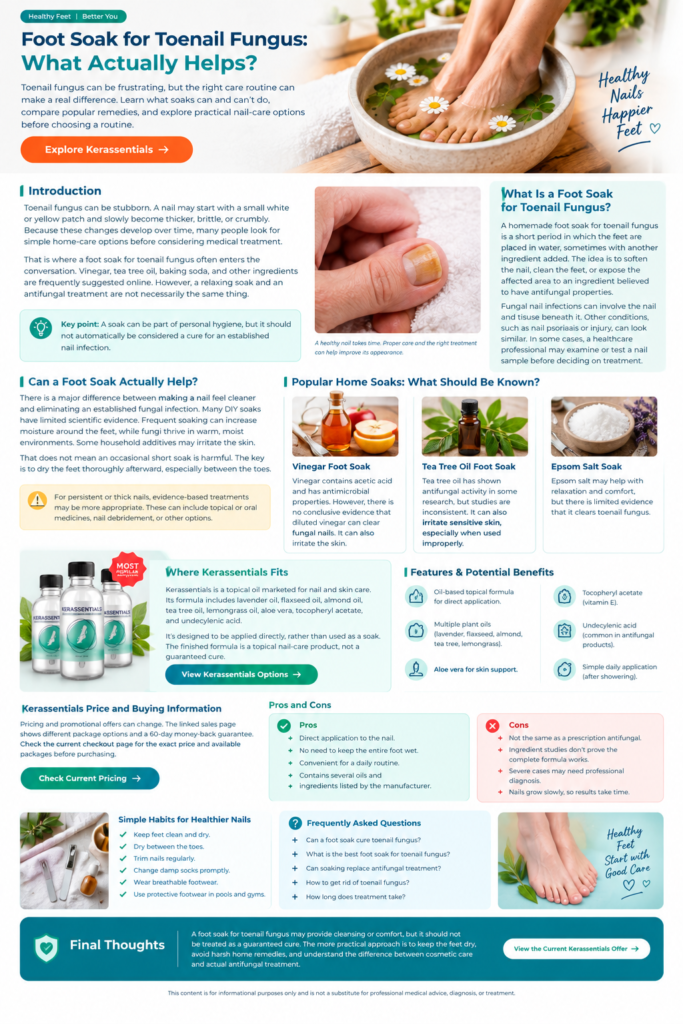
Toenail fungus can be surprisingly stubborn. A nail may begin with a small white or yellow patch and gradually become thicker, brittle, crumbly, or separated from the nail bed. Because these changes develop slowly, many people look for simple home-care options before considering medical treatment.
That is where a foot soak for toenail fungus often enters the conversation. Vinegar, tea tree oil, baking soda, Epsom salt, and other ingredients are frequently suggested online. However, a relaxing soak and an antifungal treatment are not necessarily the same thing.
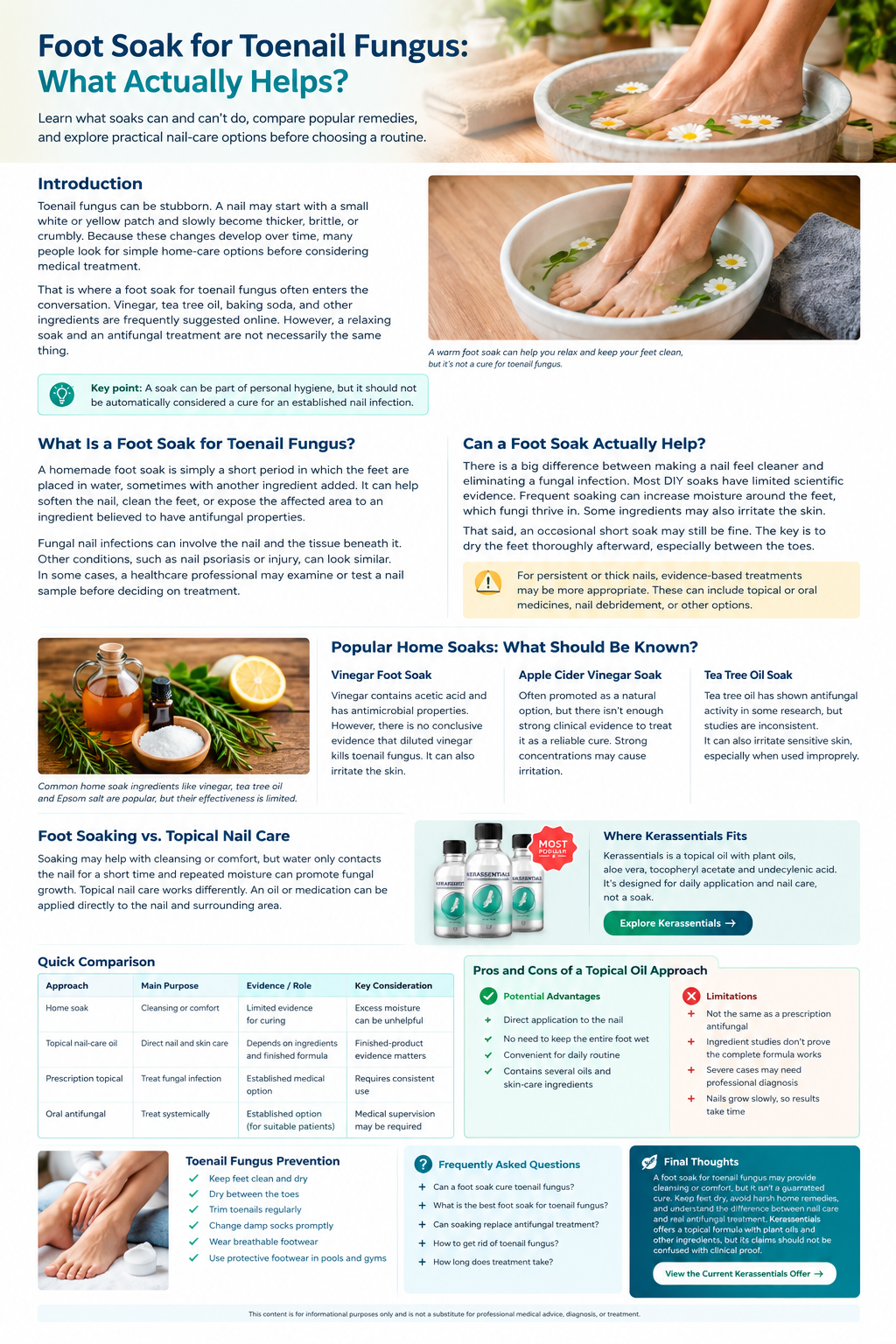
A short foot soak may support cleansing and comfort, but it should not automatically be considered a cure.
What Is a Foot Soak for Toenail Fungus?
A homemade foot soak for toenail fungus is simply a short period in which the feet are placed in water, sometimes with another ingredient added. The idea is usually to soften the nail, clean the feet, or expose the affected area to an ingredient believed to have antifungal properties.
There is an important distinction, though. Fungal nail infections can involve the nail and tissue beneath it. Other conditions, including nail psoriasis and nail injuries, can sometimes look similar. In some cases, a healthcare professional may examine or test a nail sample before deciding on treatment.
Can a Foot Soak Actually Help?
There is a major difference between making a nail feel cleaner and eliminating an established fungal infection. Many DIY soaks have limited scientific evidence behind them. Frequent soaking can also increase moisture around the feet.
An occasional short soak is not necessarily harmful for everyone, but the feet should be dried thoroughly afterward, particularly between the toes. For persistent or thick nails, evidence-based treatment may be more appropriate.
Popular Home Soaks: What Should Be Known?
Vinegar Foot Soak
Vinegar contains acetic acid and has antimicrobial properties, but antimicrobial activity does not automatically prove that diluted vinegar clears an established nail infection.
Apple Cider Vinegar
It is frequently promoted as a natural remedy, but strong clinical evidence for clearing established fungal nails remains limited.
Tea Tree Oil
Tea tree oil has shown antifungal activity in some research, but evidence for treating toenail fungus is inconsistent and concentrated oil can irritate skin.
Popular home-remedy ingredients can be discussed as part of nail-care education, while their limitations remain important.
What About an Antifungal Foot Soak?
The phrase antifungal foot soak can make a home remedy sound like a medical treatment, but the label itself does not establish effectiveness. A sensible routine focuses on keeping feet clean and dry, trimming nails appropriately, changing damp socks, and reducing prolonged moisture.
An anti fungal foot soak may be used occasionally for cleansing or comfort, but it should not replace appropriate medical treatment when a fungal nail infection has been diagnosed.
Foot Soaking vs. Topical Nail Care
People searching for a toenail fungus foot soak may actually be looking for a simple way to care for a damaged nail at home. Water only contacts the nail for a short period, while repeated moisture can be unhelpful.
Topical nail care works differently. An oil or medication can be applied directly to the nail and surrounding area according to its instructions. Soaking and topical nail care therefore should not necessarily be viewed as interchangeable options.
Where Kerassentials Fits
Kerassentials is a topical oil marketed for nail and skin care. Its product information lists lavender oil, organic flaxseed oil, almond oil, tea tree oil, lemongrass oil, aloe vera, tocopheryl acetate, and undecylenic acid among its ingredients.
The product is designed to be applied topically rather than used as a soak. An important distinction should be kept in mind: evidence about individual ingredients does not automatically prove that the finished formula cures toenail fungus.
Explore KerassentialsFeatures and Potential Benefits
- Oil-based topical format intended for direct application.
- Includes lavender, flaxseed, almond, tea tree, and lemongrass oils.
- Contains aloe vera and tocopheryl acetate.
- Contains undecylenic acid.
- Designed for a routine topical nail and skin-care approach.
Kerassentials Price and Buying Information
Pricing and promotional offers can change. The linked sales page presents different package options and promotional structures, so the live checkout page should be checked for the exact current price before purchasing. The sales page also describes a 60-day money-back guarantee.
Check Current PricingImportant Things to Know Before Using Any Home Remedy
- Not every thick or yellow nail is fungal.
- Longer soaking is not necessarily better.
- Concentrated vinegar and essential oils can irritate skin.
- Nail changes take time to grow out even after successful treatment.
Foot Soak vs. Topical Care vs. Medical Treatment
| Approach | Main Purpose | Evidence / Role | Main Consideration |
|---|---|---|---|
| Home soak | Cleansing or comfort | Limited evidence for curing nail fungus | Excess moisture can be unhelpful |
| Topical nail-care oil | Direct nail and skin care | Depends on ingredients and finished formula | Finished-product evidence matters |
| Prescription topical | Treat fungal infection | Established medical option | Requires consistent use |
| Oral antifungal | Systemic treatment | Established option for suitable patients | Medical supervision may be required |
Pros and Cons of a Topical Oil Approach
Potential Advantages
- Direct application to the affected nail.
- No need to keep the entire foot wet.
- Convenient for a daily nail-care routine.
- Contains several oils and skin-care ingredients listed by the manufacturer.
Limitations
- Not the same as a prescription antifungal.
- Ingredient studies do not prove the complete formula works as a treatment.
- Severe cases may need professional diagnosis.
- Nails grow slowly, so visible changes take time.
Who May Consider This Type of Nail-Care Routine?
A topical nail-care product may appeal to adults looking for a simple, non-prescription personal-care routine. Certain situations deserve professional attention, including diabetes, poor circulation, significant pain, bleeding, swelling, difficulty walking, or a weakened immune system.
How to Support Toenail Fungus Prevention
- Keep feet clean and dry.
- Dry carefully between the toes.
- Trim toenails regularly.
- Change damp socks promptly.
- Choose breathable footwear when possible.
- Wear protective footwear in communal showers and pool areas.
Frequently Asked Questions
Can a foot soak cure toenail fungus?
A soak should not be considered a proven cure. Evidence for many DIY soaks is limited.
What is the best foot soak for toenail fungus?
There is no medically established soak that reliably clears an established nail infection.
Can soaking replace antifungal treatment?
Generally, no. A soak may be part of personal hygiene but should not automatically replace appropriate treatment.
How to get rid of toenail fungus?
The answer depends on the diagnosis and extent of the problem. Appropriate topical or oral treatment may be needed.
How to treat toenail fungus at home?
Keeping feet dry, trimming nails, and using an appropriate topical approach may be considered for some mild cases, while persistent problems may need professional assessment.
How long does treatment take?
Treatment can take months, and the damaged portion of the nail must grow out gradually.
Final Thoughts
A foot soak for toenail fungus sounds like an easy solution, but the reality is more nuanced. Soaking may provide cleansing or comfort, yet DIY soaking should not be treated as a guaranteed cure.
The more practical approach is to keep the feet dry, avoid harsh home remedies, and understand the difference between cosmetic nail care and actual antifungal treatment.
View the Current Kerassentials OfferThis content is for informational purposes only and is not a substitute for professional medical advice, diagnosis, or treatment.